
You bought it legally. You use it responsibly. On December 11, federal law will treat it as marijuana.
That places your familiar hemp gummy under the Controlled Substances Act, the same federal law used to prosecute drug traffickers. A product you legally purchased for your own use becomes an illegal controlled substance.
Unless Congress changes course.
How widespread is this?
The U.S. Hemp Roundtable estimates that
95% of existing hemp-derived cannabinoid products will become illegal under federal law.
That includes familiar CBD products. The hemp products you routinely rely on for everyday wellness and pleasure are directly in the path of this ban.
If you’re thinking, “But I only use CBD,” keep reading.
How can a definition create a ban?
Congress enacted the change in a federal spending law in November 2025.
The Controlled Substances Act excludes hemp from its definition of marijuana. When a plant-derived cannabinoid product no longer qualifies as hemp, it loses that exemption and falls within the federal definition of marijuana.
The contents of your gummy haven’t changed. Its legal status has.
Here is the part that surprises CBD users. The new rules limit the THC in the finished product. One especially restrictive provision excludes products containing more than 0.4 milligrams per container of combined THC (including THCA) and certain other cannabinoids with similar effects, as determined by federal health officials.
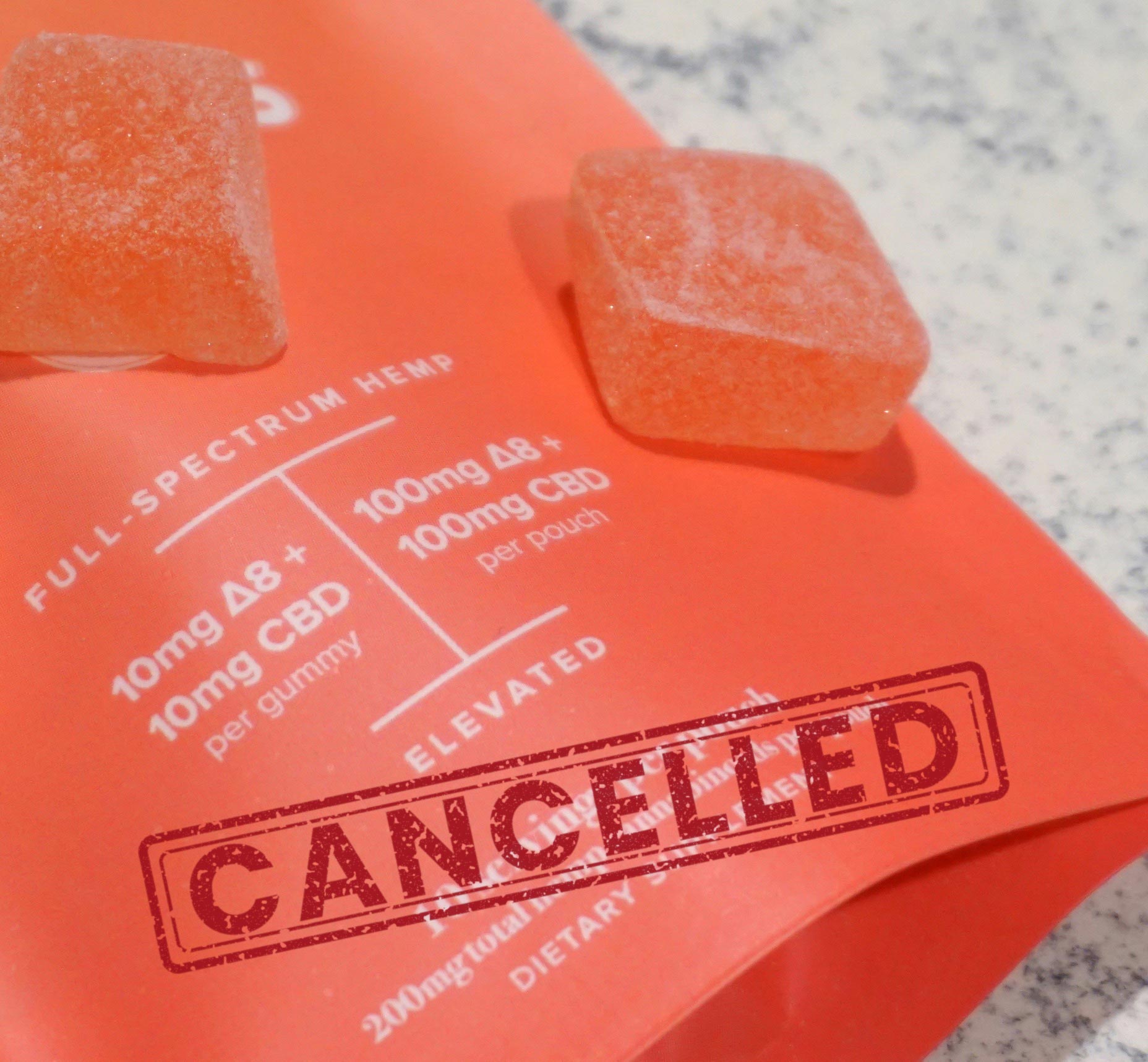
Per container. Not per gummy.
Why does that matter if you buy CBD? Because full-spectrum CBD products are made from the whole hemp extract, which naturally includes trace amounts of THC. A trace in each gummy sounds like nothing, but it adds up across everything in the container. For illustration: a bag of 30 full-spectrum CBD gummies with only 0.05 milligrams of THC in each totals 1.5 milligrams, well over the limit.
So a product chosen for its CBD, and described as having only “trace” THC, can still land on the wrong side of the line. A small amount of THC can have a useful place in a formulation. Under this law, even that small amount can be enough to disqualify the product.
What about broad-spectrum and CBD-isolate products?
The ban reaches beyond stronger THC gummies and beverages to products people use as part of a quiet evening or an everyday wellness routine.
Broad-spectrum and CBD-isolate products require individual review, too. Their names alone do not establish compliance. The actual contents and manufacturing process matter.
Two dates deserve attention
The full ban was originally scheduled to take effect November 12. The most recent continuing resolution moved most of it 30 days, to December 11.
November 12, 2026:
The exclusion for products containing cannabinoids the cannabis plant cannot naturally produce takes effect.
December 11, 2026:
The remaining restrictions take effect, including the new THC limits and the separate exclusion for naturally producible cannabinoids synthesized or manufactured outside the plant.
What if my state allows these products?
A product can remain legal under state law while becoming illegal under federal law.
Minnesota, for example, says its lower-potency hemp edible framework will continue despite the federal change. Products that comply with Minnesota law will still be permitted under that state framework.
But Minnesota’s permission does not restore the federal hemp exemption.
Think about marijuana today. Many states have legalized it, and it remains illegal under federal law. A federal arrest over a single CBD gummy is unlikely. But the law doesn’t weigh how sympathetic the person is: a 70-year-old with a gummy in her nightstand and a drug trafficker are both violating the same federal law. Enforcement will look very different. The legal status will not.
The ban also reaches interstate commerce. Once it takes effect, it will be illegal to ship affected products across state lines. That means you cannot order them from an out-of-state retailer, and you cannot lawfully pack them for a trip between states, even states that permit them.
What this means for BoBo Botanicals
None of BoBo’s products can be mailed across state lines once the ban takes effect. I can still sell them in Minnesota and Wisconsin. I’ll keep you updated as things develop, and I’ll tell you plainly what changes and what doesn’t.
Before December 11: Two Ways to Stock Up
If you live outside Minnesota and Wisconsin and want to stock up, this is the window.
- Buy 3 or more products and get 20% off. Use code HEMPBAN20.
- Buy 5 and get a free Sweet Dreams+. Use code HEMPBAN5.
Offers end December 8, which is also the last day to order for shipping outside Minnesota and Wisconsin.
Questions people are asking
Does this affect products that are only CBD? Possibly. Many CBD products contain trace amounts of THC, and the new limit is 0.4 milligrams per container. Check the lab report for your product and look at the total THC, not just the label’s front panel.
Can I still buy hemp products in Minnesota? Yes. Minnesota says its framework continues. Those products would still be illegal under federal law, as marijuana is in states that have legalized it.
Can I take my gummies on a trip? Not across state lines once the ban takes effect.
Can I order from a company in another state? No. Shipping across state lines will be off-limits for affected products.
Why are there two dates? The full ban was originally scheduled for November 12. The most recent continuing resolution moved most of it 30 days, to December 11. The exclusion for cannabinoids the plant can’t naturally produce still takes effect November 12.
Can Congress change this before December 11? Yes, and that is the point of the next section.
Tell Congress to protect your hemp choices
As a hemp and cannabis attorney and the founder of BoBo Botanicals, I support responsible standards for testing, accurate labels, manufacturing, and adult access. Consumers deserve those protections. They also deserve to retain access to thoughtfully formulated products.
If these products matter to you, tell the people who represent you.
Contact your U.S. senators and representative. Explain which hemp products you use, what losing access would mean for you, and ask them to replace this sweeping ban with sensible regulation that protects consumers and preserves access.
You do not need a legal argument. Your own experience is the point.
Find your U.S. senators and find your U.S. representative.
December 11 is approaching. Contact them now.
Get the weekly update
I’m sending a short weekly email on where this stands and what it means for you. Sign up here.
This post is general information only and is not legal advice.